

Some people develop allergies from contact with substances that are completely harmless for most people. With jewelry, this is usually called contact dermatitis, and the most common symptom is a red, itchy rash, sometimes pretty uncomfortable, that shows up right where the piece touched the skin. The good news is that stainless steel sits on the safe side of this equation for the most part, and that's what we're breaking down in this article.
If you've already given up on certain pieces because of skin reactions, or you just want to understand why some jewelry makes you itch and other pieces don't, it's worth understanding how this material actually works before you buy your next piece.
Is stainless steel hypoallergenic?
Yes, stainless steel is considered hypoallergenic, meaning the odds of it triggering an allergic reaction are much lower than with other metals, like low-karat gold or lower-purity silver alloys. That's largely down to its chemical makeup: chromium, present in significant amounts, forms an invisible protective layer on the surface of the piece that prevents corrosion and wear, while nickel, the real culprit behind most allergic reactions, is present in a much more stable form and in trace amounts.
It's worth being precise here: "hypoallergenic" doesn't mean "impossible for anyone to react to." It means the risk is significantly lower than with most metals used in everyday costume jewelry, which already makes a huge difference for anyone with more reactive skin.
How to tell if you have a metal allergy
Before figuring out whether stainless steel is the right fix for you, it helps to know how to recognize a metal reaction. The most common signs are redness, itching, small bumps, or a burning feeling right where the piece touched your skin, whether that's your earlobe, wrist, finger, or neck. These symptoms often show up hours, or even days, after contact, which can make it tricky to figure out which piece caused it.
If you've had this kind of reaction with costume jewelry, watches, or even belt buckles and jean buttons, there's a good chance the nickel in those alloys is the actual problem, not jewelry as a whole. In that case, switching to 316L stainless steel is usually the first thing to try before any formal dermatology testing.
There are different types of stainless steel
Not all stainless steel is the same, and the composition varies by type. Here are the most common ones used in jewelry:
- 316L stainless steel: one of the most popular materials for stainless steel jewelry. It's corrosion resistant, won't rust, and is extremely durable. It's commonly used for rings, earrings, bracelets, and necklaces.
- 304 stainless steel: also quite popular. It's corrosion resistant and often used for pendants, earrings, and necklaces.
- 316LVM stainless steel: a variation of 316L that goes through heat treatment to increase its strength. It's frequently used in piercing jewelry, like nose rings and bars.
You can think of these three as belonging to the same "family" (the 300 series), but with small differences in composition that affect both durability and how safe they are for sensitive skin.
Which type is the most hypoallergenic
Within the 300 series, 304 and 316L are the most recommended for people with contact dermatitis, but they're not quite equivalent. 304 steel tends to work well for people with a low to medium level of allergic reaction, while 316L is considered the safest of all, and it's the one recommended for people with a higher level of reaction.
| Type | Corrosion resistance | Hypoallergenic level | Most common use |
|---|---|---|---|
| 304 steel | Good | Medium | Pendants, earrings, necklaces |
| 316L steel | Excellent | Very high | Rings, bracelets, necklaces, daily wear |
| 316LVM steel | Excellent | Very high | Piercings and medical-grade jewelry |
Beyond being the safest option for sensitive skin, 316L is also incredibly durable: the chromium in its composition reacts with oxygen in the air to form a protective layer that makes the steel highly resistant to corrosion and rust, so you're getting safety and longevity in the same piece.
What type of stainless steel does Dicci use
At Dicci, we use 316L stainless steel across our entire collection. So if you have any kind of allergic reaction to metals, this is the most recommended and safest option for you. Our stainless steel won't cause any problems or allergic reactions on your skin, so there's nothing to worry about.
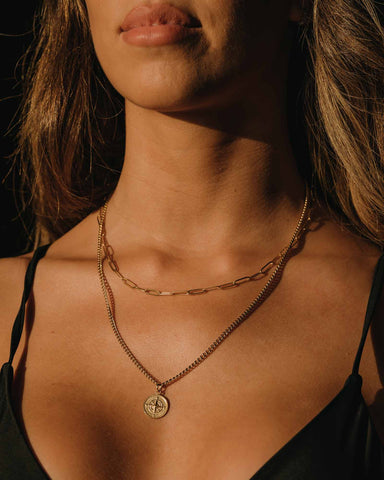
Pieces to start your collection



Frequently asked questions
Can I wear stainless steel if I've reacted to costume jewelry before?
Yes. In most cases, the reaction is caused by the nickel in cheaper alloys, not by jewelry itself. 316L steel releases minimal amounts of nickel, making it safe even for fairly reactive skin.
Is 316L stainless steel the same grade used in medical settings?
It's basically the same grade, yes. Its heat-treated variant, 316LVM, is the one used for piercings and implants, precisely because of how well it's tolerated by the body.
Is there a way to test if I'm allergic before buying?
If you have a history of strong reactions, the safest route is talking to a dermatologist, who can run a patch test. For mild to moderate reactions, 316L steel is usually well tolerated without needing any testing beforehand.
Are gold-toned stainless steel pieces just as safe?
Yes. The gold finish is applied as a PVD coating over the 316L steel base, which means the layer in direct contact with your skin is still the same hypoallergenic steel.
Is all stainless steel hypoallergenic?
Not necessarily. "Stainless steel" covers several different alloys, and they don't all offer the same level of safety. That's why it's always worth confirming whether a brand uses 316L specifically, rather than just labeling it "stainless steel" in general.
In short, stainless steel, especially the 316L grade, is an excellent choice for anyone with sensitive skin or allergic reactions to other metals. It's always worth checking which grade of steel a piece is made from, so you can be sure you're getting the right level of safety for you. Now that you know stainless steel is hypoallergenic, ditch the worry and don't miss the chance to stand out with our stainless steel jewelry.


0 comments